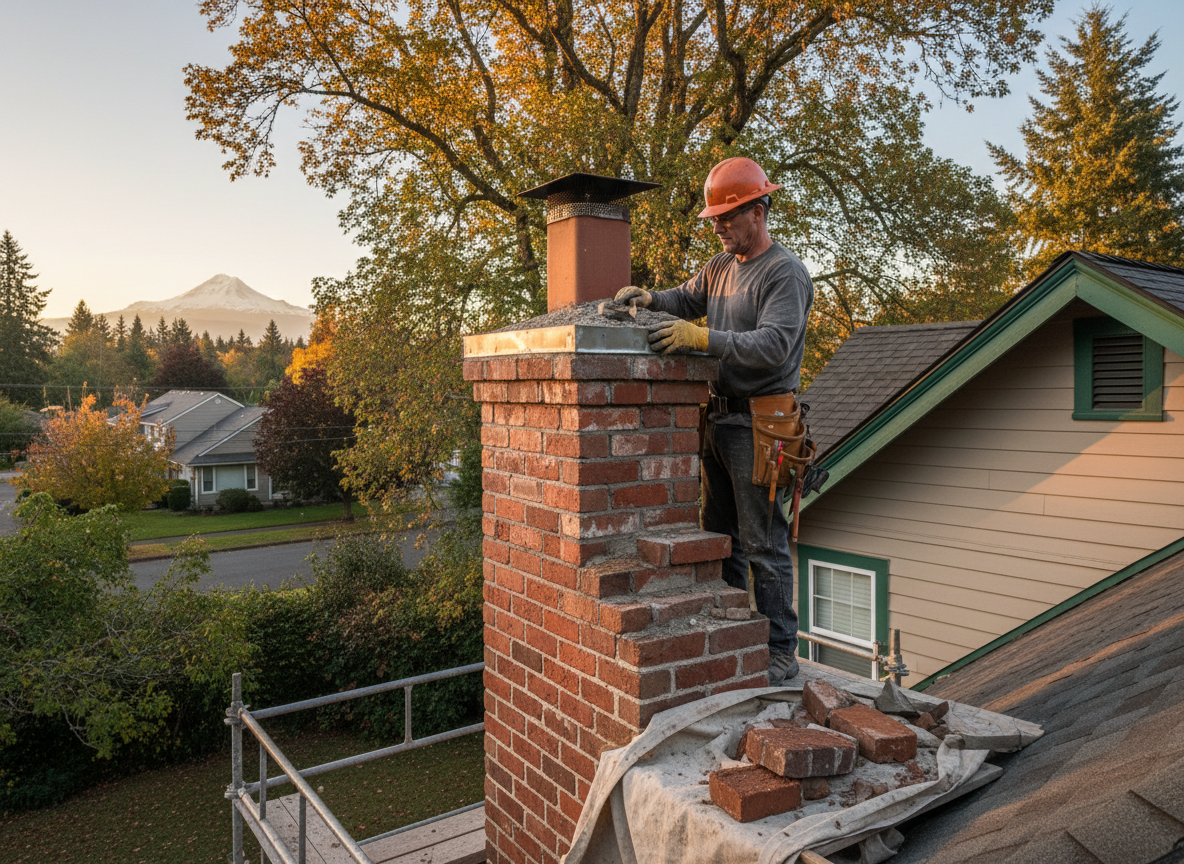
Gresham homes in Rockwood and Downtown often feature mid-century brick chimneys set on older foundations that shift slightly with the wet winters common across Multnomah County. Constant rain and occasional flooding push moisture into mortar joints and through flue liners, causing spalling bricks and loose crowns that allow water to reach the attic. Repair work here starts with removing failed mortar and damaged brick while preserving original courses, then installing new concave joints that shed water instead of trapping it. Mild summers give crews a short window before fall rains return, so jobs focus on materials that cure quickly yet hold up to Portland-area freeze-thaw cycles.
Edge cases appear when chimneys sit near the Gresham Pioneer Cemetery or along slopes draining toward Mt. Hood Community College, where soil saturation stays high longer after storms. In these spots, crews check for hidden cracks below the roofline and add through-wall flashing if the original installation lacked it. Code notes in Multnomah County require proper termination height and spark arrestors on any rebuilt section; skipping these details triggers failed inspections. Homeowners sometimes attempt DIY tuck-pointing with the wrong mortar mix, which accelerates further cracking once winter moisture returns.
Seasonal Moisture Patterns
Wet winters in Gresham mean repeated saturation of brickwork followed by quick temperature swings that open new cracks each year. Crews schedule repairs after the ground dries enough to support ladders yet before the next storm system arrives from the coast.
Common Material Failures
Soft, sand-lime mortar used in many Rockwood chimneys dissolves faster than modern Type N mixes when exposed to constant drizzle. Replacement bricks must match the original color and texture so the stack does not stand out against the older housing stock typical in Downtown Gresham.
Technician insight
In Gresham, the thing that catches most people out with brick chimney repair is how quickly winter rain soaks into the soft mortar of Rockwood chimneys built before modern flashing standards. Once water reaches the flue, it travels down into the attic during the long wet season, and homeowners often miss the early spalling until a leak appears. The occasional flooding along lower ground near Mt. Hood Community College makes base joints especially vulnerable.
Rockwood Chimney Leak After Heavy Rain
Water stains appeared on the ceiling of a Rockwood home following several days of Multnomah County rain. Inspection revealed deteriorated mortar and a cracked crown allowing water past the flue. Crews rebuilt the crown, repointed all joints with a water-shedding profile, and added step flashing at the roof intersection. The attic stayed dry through the rest of the wet season.
How it works
- 1
Site Assessment
Technician inspects the full chimney stack from roof to firebox, noting mortar condition, brick spalling, and water entry points common after Gresham winters.
- 2
Damage Documentation
Photos and measurements are taken for areas affected by flooding or prolonged rain, including joints near the crown and any offset caused by soil movement in Multnomah County.
- 3
Material Selection
Appropriate brick and mortar are chosen to match existing construction while resisting the wet climate that affects chimneys throughout Rockwood and Downtown.
- 4
Repair Execution
Failed sections are rebuilt, new mortar tooled for water shedding, and flashings adjusted to prevent future intrusion during mild summers and heavy winter rains.
- 5
Final Check
The chimney is tested for draft and water resistance before the crew leaves the 1005 N Main Ave base.
Pricing
Upfront quotes after inspection reflect the extent of brick and mortar work required on each Gresham chimney.