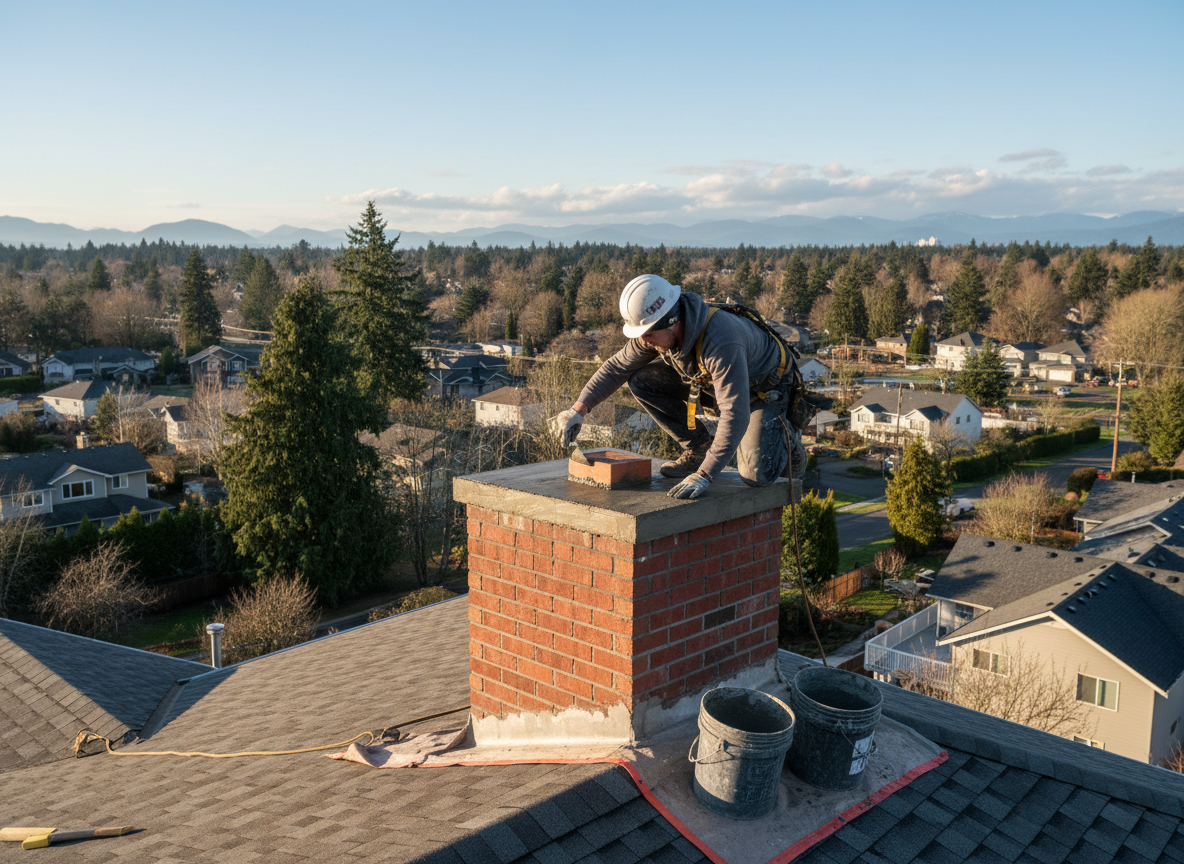
Gresham homes built before the 1980s, especially those near the Gresham Pioneer Cemetery or along Rockwood streets, often have original concrete crowns that crack under repeated freeze-thaw cycles. Wet winters bring prolonged rain and occasional flooding that pools on flat or poorly sloped crowns, then seeps behind the flue tile. Once moisture reaches the brick, spalling accelerates and interior ceilings stain. A proper repair starts with removing loose material, installing a new monolithic crown with integral drip edge, and sealing the flue-to-crown joint so water sheds away from the masonry rather than into it.
Mild summers give crews a short window to work before the next front rolls in from Portland, so prep must be thorough. We slope the new crown a minimum of one inch per foot, embed stainless flashing at the flue collar, and tool control joints to prevent random cracking. Homeowners near Mt. Hood Community College frequently call after noticing white efflorescence on the crown surface; that is the first visible sign water is already moving through the masonry. Addressing the crown before the leak reaches the attic prevents far larger repairs later.
Terrain around Gresham means many chimneys sit on sloped lots where runoff concentrates at the base. When a crown fails, water follows the flue exterior and saturates the foundation wall on the downhill side. We always inspect the crown, the step flashing, and the counter flashing during the same visit so the entire water path is corrected in one mobilization.
Technician insight
In Gresham, the thing that catches most people out with chimney crown repair is how quickly water from our wet winters travels down the flue and soaks the ceiling joists in older Rockwood homes; they notice the stain in the living room but the crown itself has been cracked for three or four seasons already.
Rockwood Crown Failure
Water stains appeared on the ceiling of a 1970s home in Rockwood after heavy winter rain. We found the original crown had cracked along the flue collar and water was running behind the brick. We removed the failed cap, installed new flashing and a properly sloped monolithic crown, then sealed the assembly. No further leaks occurred the following winter.
How it works
- 1
Site Assessment
Examine crown condition, slope, flashing, and water stains from the attic in Gresham homes.
- 2
Demo and Prep
Remove failed concrete, clean the flue collar, and install new stainless flashing.
- 3
New Crown Pour
Form and pour a monolithic cap with proper slope and drip edge using fiber-reinforced mix.
- 4
Cure and Seal
Allow cure time, tool joints, and apply breathable masonry sealer rated for wet winters.
Pricing
Cost depends on chimney height, access, and extent of existing damage; we provide upfront quotes after inspection.