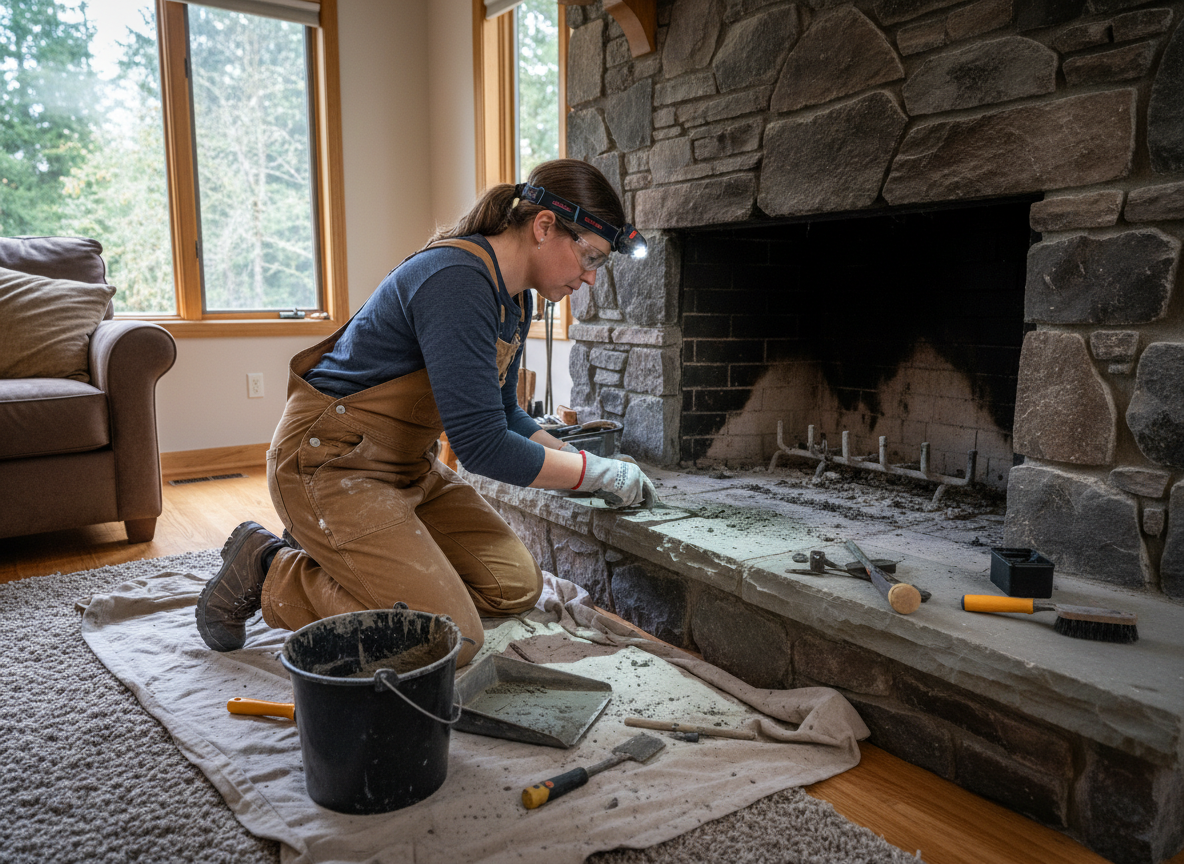
Gresham homes built before the 1980s in neighborhoods like Downtown and Rockwood often feature masonry fireplaces that suffer from prolonged exposure to the area's wet winters. Moisture from frequent rain and occasional flooding seeps into brick and mortar joints, especially where homes sit on the flatter terrain near Gresham Pioneer Cemetery. This leads to spalling bricks, deteriorated firebox linings, and damper mechanisms that stick or corrode from constant dampness. Technicians at DraftSafe Masonry see these patterns repeatedly when working on properties close to Mt. Hood Community College, where older chimneys vent through unlined flues that trap condensation during mild summers followed by sudden cold snaps.
Repair work here requires careful assessment of water intrusion points because Multnomah County soil retains moisture longer than drier inland areas. Crews routinely check for hidden cracks around the hearth that allow groundwater migration during flooding events common along the eastern edges of Gresham. Materials must match the original clay flue tiles or refractory cement used in Portland-era construction, since mismatched patches fail quickly under repeated freeze-thaw cycles. Homeowners near Rockwood frequently discover that what looks like a simple smoke smell actually stems from compromised backdraft diverters damaged by years of damp air rising from the Columbia River basin.
Code considerations in Gresham tie directly to Multnomah County requirements for proper clearance and liner integrity when repairing fireplaces that serve as primary heat sources during winter power outages. DraftSafe Masonry crews inspect for carbon monoxide pathways created when water erodes mortar in shared chimneys common in older Downtown duplexes. These jobs often involve rebuilding the smoke chamber shelf to restore proper draft after years of soot buildup accelerated by the region's mild but humid summers that never fully dry interior masonry.
Technician insight
In Gresham, the thing that catches most people out with fireplace repair is how wet winters push groundwater into the base of older masonry fireplaces in Rockwood homes. The flat terrain near the cemetery lets water sit against foundations longer than in hillier parts of Portland, so what starts as a small crack in the firebox turns into full liner failure by the next season. Homeowners often miss the early signs because the mild summers never dry things out completely.
Rockwood Fireplace Moisture Damage
A homeowner in Rockwood noticed smoke backing into the living room after heavy winter rain. Inspection revealed water had entered through deteriorated mortar at the hearth base, saturating the firebox floor. Crews rebuilt the lower firebox with moisture-resistant refractory materials and restored the original brick facing to match the 1970s construction.
How it works
- 1
Initial Site Assessment
Technician inspects the firebox, damper, and flue for water damage patterns typical after Gresham winters.
- 2
Moisture Source Identification
Check for flooding pathways and condensation points common in Rockwood and Downtown properties.
- 3
Material Matching and Repair
Replace damaged brick or refractory cement using mixes suited to Multnomah County humidity levels.
- 4
Draft and Safety Verification
Test airflow and confirm no carbon monoxide risks remain before returning the fireplace to service.
Pricing
Upfront quotes provided after on-site inspection of moisture and structural conditions.