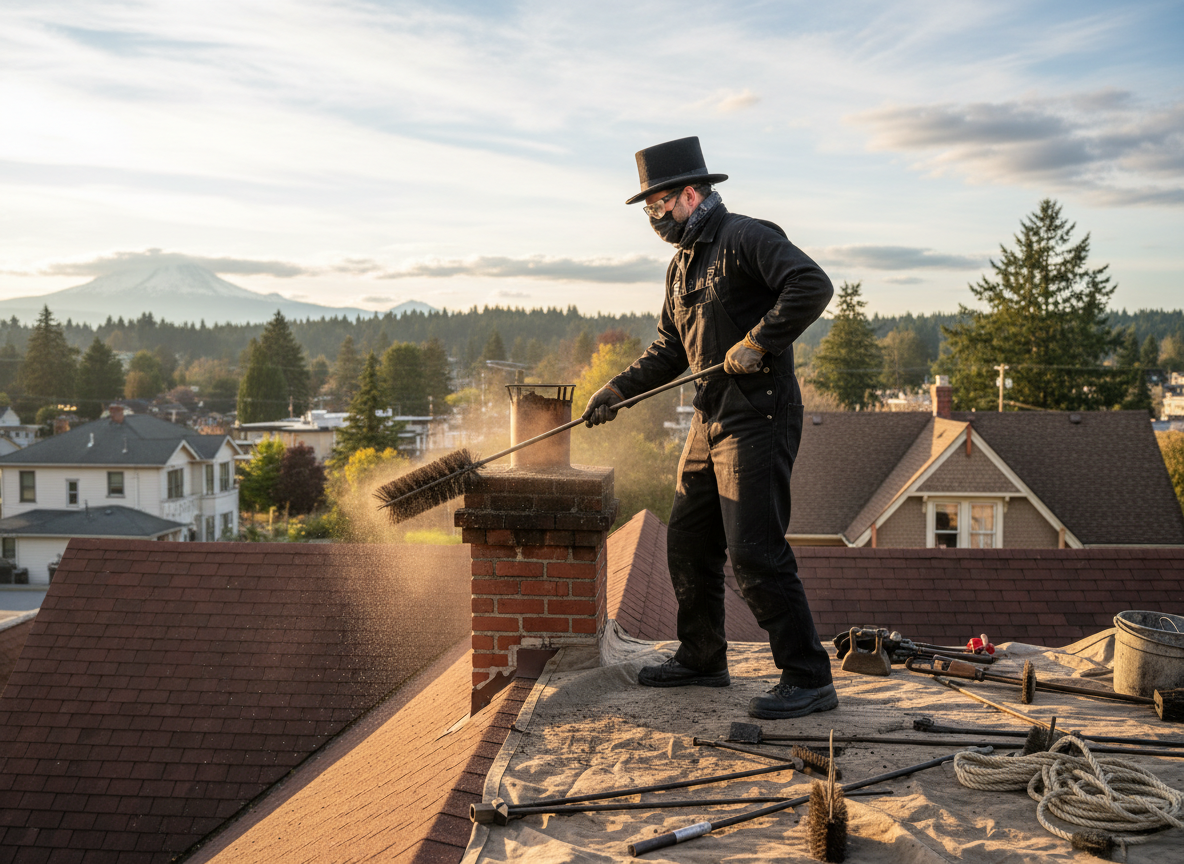
Gresham’s housing stock in neighborhoods like Rockwood and Downtown often features mid-century brick chimneys that have endured decades of wet winters. These conditions drive rapid creosote buildup and moisture retention inside flues, especially on homes near Gresham Pioneer Cemetery where mature trees block airflow. A proper sweep removes hardened deposits that standard brushes miss, preventing draft problems that appear once temperatures drop and wood stoves run daily.
Mild summers give way to frequent rain that saturates chimneys connected to homes around Mt. Hood Community College. Water migrates through hairline cracks in mortar joints, carrying soot downward and staining interior walls. During a sweep we inspect for these hidden moisture paths, clearing obstructions that would otherwise force smoke back into living spaces when the first cold snap arrives.
Multnomah County homes near Portland frequently use both masonry and factory-built chimneys. Each type collects creosote differently; metal liners in newer Rockwood additions trap sticky Stage 2 deposits that require rotary tools rather than simple brushes. Skipping these steps leaves residue that ignites at lower temperatures during the next winter storm.
Seasonal Creosote Patterns
Wet winters accelerate third-stage creosote formation on north-facing flues. Homeowners who burn green wood from local lots see the fastest buildup and should schedule sweeps before November rains begin.
Technician insight
In Gresham the thing that catches most people out with chimney sweep is how quickly wet winters push creosote from Stage 1 to Stage 3 inside chimneys on older Rockwood homes. The north side of the flue stays damp longer because of our frequent rain and limited sun, so a standard brush job leaves the dangerous hard layer behind. I always run a rotary tool on those flues before the first freeze.
Hidden Moisture in Rockwood Chimney
A homeowner in Rockwood called after noticing smoke backing up on cold mornings. We found heavy creosote combined with water staining from winter rains that had entered through a cracked crown. After a full rotary sweep and crown repair recommendation, the flue drafted cleanly and the staining stopped.
How it works
- 1
Initial Assessment
We arrive at your Gresham address and examine the chimney crown, flue, and damper for water damage common after Multnomah County flooding events.
- 2
Protective Setup
Drop cloths and vacuum systems are placed to contain soot in homes near Downtown where older plaster can be easily stained.
- 3
Mechanical Cleaning
Rotary brushes and rods remove creosote layers built up from wet-season burning, paying special attention to bends common in Rockwood split-level homes.
- 4
Final Inspection
We check for remaining obstructions and confirm proper draft before leaving the property.
Pricing
Upfront quotes based on chimney height, liner type, and creosote level; no hidden fees.