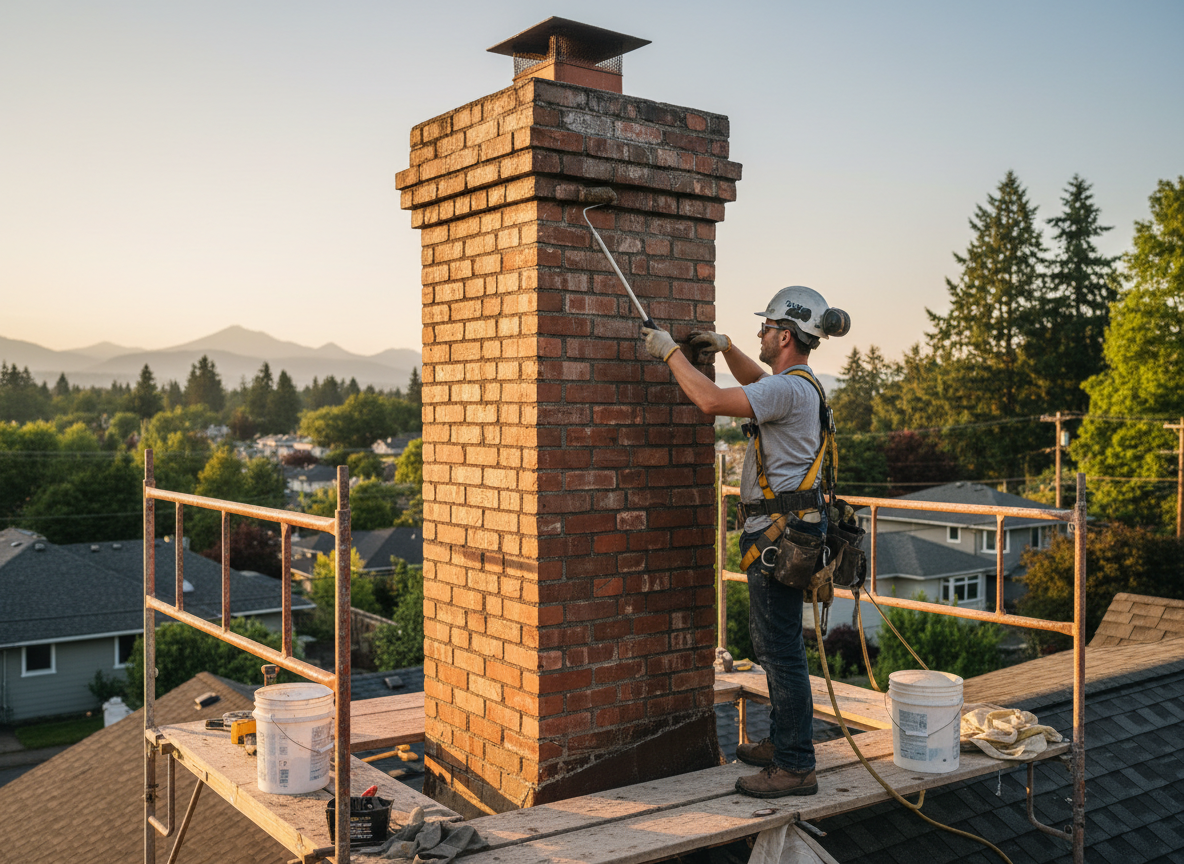
Gresham homes near Rockwood and Downtown often feature chimneys built before modern flashing standards, and the county's wet winters with occasional flooding push water through crown cracks and mortar joints faster than in drier climates. Waterproofing starts with cleaning the flue and crown, then applying a breathable masonry sealer that allows vapor to escape while blocking liquid intrusion. In areas close to Mt. Hood Community College, mature trees drop debris that holds moisture against the stack, so the sealer must also resist organic staining and repeated freeze-thaw cycles common even in mild summers.
Flooding in lower Multnomah County lots can saturate soil against the foundation and wick upward into the chimney base, especially on older properties where the flue runs through unconditioned space. We use elastomeric coatings on the crown and step flashing interfaces that expand and contract with the masonry rather than cracking like rigid cement patches. Portland commuters in Gresham notice the difference after one season when interior water stains stop appearing during heavy rain events that used to reach the firebox.
Edge cases include chimneys with clay flue liners that have hairline cracks; these require a different low-viscosity sealer that penetrates without trapping moisture behind the liner. We also check for missing rain caps that allow direct water entry during the long wet season, and we note that any waterproofing done without first repairing active leaks will fail within two winters.
Technician insight
In Gresham the thing that catches most people out with chimney waterproofing is how wet winters and occasional flooding let water wick up from saturated soil into the base of older chimneys in Rockwood and Downtown, especially when the original mortar has already softened from decades of rain.
Rockwood Chimney After Winter Flooding
Water stains appeared inside a Rockwood home after heavy rain. We found the crown had open joints and the base mortar was soft from soil saturation. We cleaned, sealed the crown with breathable sealer, and coated the lower courses where water had wicked upward. No further interior moisture appeared the following winter.
How it works
- 1
Site Assessment
We inspect the crown, flue, flashing and surrounding roof deck for water entry points common in Gresham homes.
- 2
Surface Preparation
Moss, debris and loose mortar are removed so the sealer bonds directly to sound masonry.
- 3
Sealer Application
Breathable masonry sealer is applied to the crown and upper courses while elastomeric coating protects step flashing.
- 4
Final Check
We verify drainage at the base and confirm no new moisture paths exist before leaving the site.
Pricing
Cost depends on chimney height, access and existing damage; we provide upfront quotes after inspection.