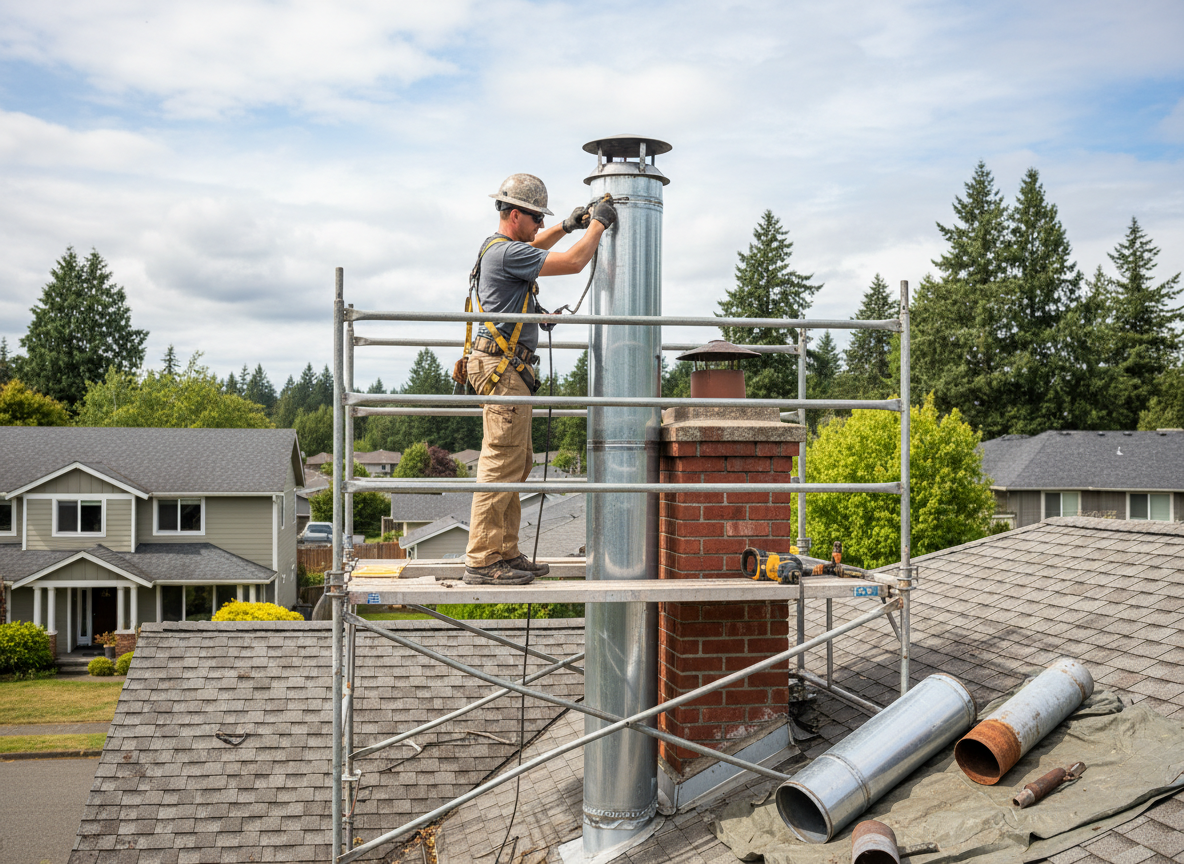
Prefabricated chimneys in Gresham homes built before the 1990s often develop seam leaks where metal sections meet masonry bases, especially along Rockwood streets where soil shifts from occasional flooding. Wet winters push water past factory gaskets and into the flue liner, creating rust that spreads upward toward the crown. Homeowners near Mt. Hood Community College see this accelerate because mild summers give way to sudden heavy rains that saturate the chase before crews can dry it out.
Repair starts with removing the damaged outer shroud and inspecting the inner flue for creosote buildup that traps moisture against the metal. We replace failed flashing at the roofline using copper step flashing cut to match the existing pitch common on Gresham ranch houses, then reseal joints with high-temperature silicone rated for the freeze-thaw cycles in Multnomah County. Edge cases include units installed too close to gutters that overflow during Portland-area storms, forcing water down the exterior wall.
Code requires maintaining proper clearance to combustibles when rebuilding the chase, something inspectors check closely in Downtown renovations. Skipping this step leads to callbacks when insulation settles against the metal. We always photograph the original installation before work begins so owners can see exactly where the factory seams failed.
Terrain plays a role on sloped lots near Gresham Pioneer Cemetery where runoff pools against the foundation and wicks upward into the chimney base. Addressing the grade before resealing prevents repeat failures that homeowners in flatter Portland neighborhoods rarely encounter.
Technician insight
In Gresham the thing that catches most people out with prefabricated chimney repair is water that enters at the roofline during wet winters then travels down the chase and pools at the base on Rockwood lots where soil stays saturated. Homeowners assume the metal unit is sealed forever but the factory gaskets fail after twenty years of freeze-thaw and the first sign is often staining on the ceiling near Mt. Hood Community College homes.
Rockwood Prefab Leak After Winter Storms
Water stains appeared on an interior wall of a 1970s Rockwood ranch after heavy rain. Inspection showed failed upper seams allowing runoff to travel inside the chase and exit at the foundation. We replaced the top two sections, installed new step flashing, and regraded the base to direct water away from the house. The homeowner reported no further moisture through the next wet season.
How it works
- 1
Initial Inspection
We examine the prefabricated sections, roof flashing, and base for water entry points common after Gresham winters.
- 2
Moisture Assessment
Interior and exterior checks locate trapped water from flooding or gutter overflow before any disassembly.
- 3
Component Replacement
Damaged shrouds, gaskets, and flashing are swapped using materials matched to the original unit's age and exposure.
- 4
Final Sealing and Test
All joints are resealed and the system is tested for draft and leaks under simulated rain conditions.
Pricing
Upfront quotes after on-site inspection; cost driven by height, number of sections replaced, and access on sloped Gresham lots.