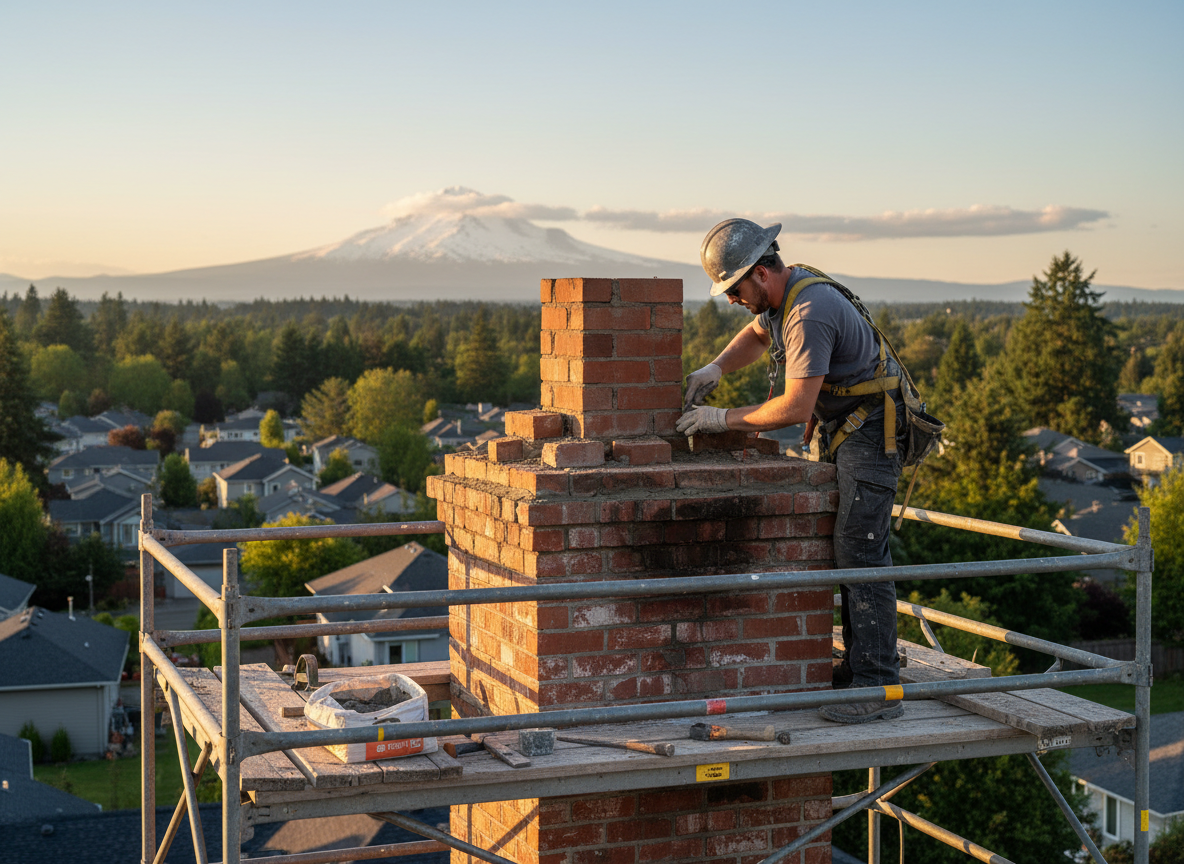
Gresham homes built before the 1970s in Rockwood and Downtown often feature single-wythe brick chimneys set on concrete foundations that sit close to grade. Wet winters drive water through hairline cracks in the flue tile and mortar joints, then freeze-thaw cycles in the shoulder seasons widen those gaps until spalling bricks appear above the roofline. Occasional flooding along Johnson Creek and the Sandy River raises soil moisture around footings, so we always check for settlement cracks at the chimney base before any upper work begins.
Mild summers do not dry saturated masonry the way drier climates do, so efflorescence and moss become persistent issues on north-facing stacks near Mt. Hood Community College. We repoint with type-N mortar matched to the original, install new stainless-steel flue liners when tile damage reaches the smoke chamber, and add cricket flashing on low-slope roofs common in the area to keep runoff from re-entering the masonry.
Homeowners in Portland-facing neighborhoods sometimes attempt DIY crown repairs with standard concrete mixes that shrink and crack within two seasons. We form and pour a monolithic refractory cement cap sloped to drain, then seal the joint between cap and flue with high-temperature caulk rated for continuous wet exposure.
Seasonal Guidance
Schedule inspections after the first hard rain in October; water stains on the attic side of the flue usually appear within 48 hours and indicate failed flashing or crown before interior drywall damage shows.
Technician insight
In Gresham, the thing that catches most people out with professional chimney repair is how wet winters push water through the crown and into single-wythe brick in Rockwood homes; the moisture then migrates down the flue and shows up as stains two stories below, long after the roof leak appears fixed.
Rockwood Brick Stack After Heavy Rain
Water stains appeared on the second-floor ceiling of a 1960s home near Rockwood after three days of steady rain. We found failed mortar at the crown and open joints where the flue met the roof deck. New refractory cap, stainless liner, and targeted repointing stopped the intrusion; the homeowner reported no further staining through the next winter.
How it works
- 1
Site Assessment
We examine the stack from roof to foundation, note water entry points, and check for settlement in flood-prone pockets of Rockwood.
- 2
Moisture Diagnosis
Moisture meters and visual inspection of mortar joints and flue tile locate active leaks caused by Gresham's repeated winter saturation.
- 3
Targeted Repair
Repointing, crown replacement, or liner installation is performed with materials suited to constant damp conditions rather than dry-climate mixes.
- 4
Final Water Test
A controlled hose test verifies the repair before we leave the job in Downtown or near the Gresham Pioneer Cemetery.
Pricing
Upfront quotes provided after on-site inspection; final price depends on height, access, and extent of water damage.