2026-10-24 ·
Moss Growth on Chimneys Near the Columbia River Gorge
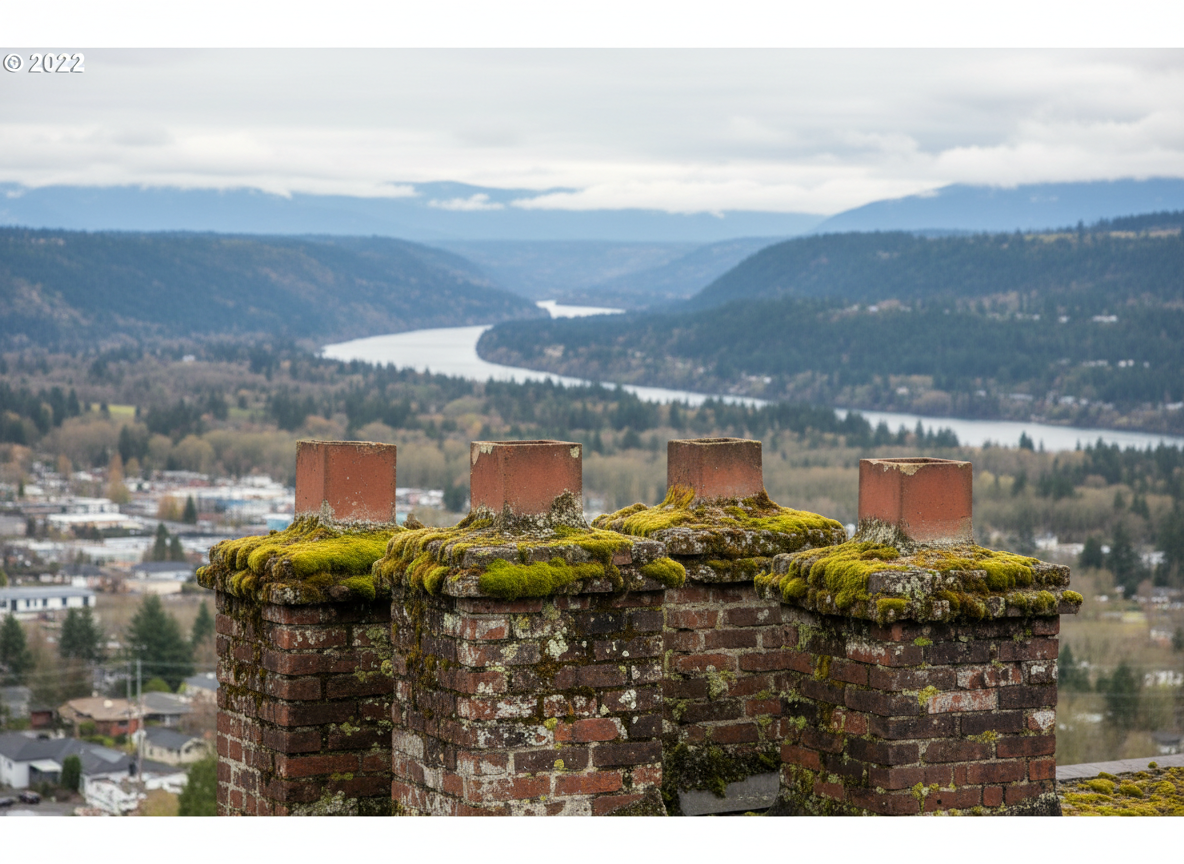
Moss growth on chimneys near the Columbia River Gorge typically begins showing visible patches within 3–5 years on untreated masonry in Gresham. Persistent rain from the Gorge funnels extra humidity into Multnomah County, where mild summers fail to fully dry surfaces before the next wet season arrives. Homes near Gresham Pioneer Cemetery and Mt. Hood Community College often sit under tree cover that blocks sun and holds moisture against flues, turning small spores into thick mats that hold water against brick joints.
Why Moss Thrives in Gresham’s Climate
Gresham’s position east of Portland exposes chimneys to Columbia River Gorge winds that carry extra moisture even on mild days. Wet winters with occasional flooding keep mortar and brick saturated for months, while the 40–50 inches of annual rain far exceeds what interior Oregon sees. Rockwood and Downtown streets hold older housing stock built before modern flashing standards, so runoff from roofs pools at chimney bases. Tree-lined lots around Mt. Hood Community College shade stacks for most daylight hours, preventing the drying cycles that normally limit moss. These conditions combine to let moss roots penetrate hairline cracks that form during freeze-thaw cycles common in Multnomah County winters.
How Moss Damages Chimney Masonry
Moss holds water against mortar joints and brick faces, extending the time surfaces stay damp after each storm. In Gresham this prolonged saturation softens lime mortar within 8–12 years on many pre-1980 homes, allowing water to reach flue liners. Roots pry apart small gaps, turning minor tuckpointing needs into full chimney masonry repair jobs. Flooding events along the Sandy River corridor push additional silt into crown cracks, giving moss new footing each spring. Over time the added weight and trapped moisture accelerate spalling on south-facing stacks that receive the least sun.
Inspection Steps for Gorge-Area Chimneys
Start at ground level and scan for green or black patches on the north and east sides where shade lasts longest. Use binoculars to check the crown and flashing for moss clusters near the roofline, especially on homes in Fairview and Troutdale that share similar Gorge exposure. After fall rains, note any new growth around the chimney crown repair area and along mortar lines. Probe soft spots with a screwdriver; if the tool sinks more than 1/4 inch, water has already compromised the joint. Document photos from the same angle each season to track spread rates typical for East Multnomah County stacks.
Prevention Through Maintenance
Apply a breathable masonry sealer every 5–7 years to reduce water absorption without trapping vapor inside the flue. Trim branches that overhang chimneys in Rockwood yards so stacks receive at least four hours of direct sun daily. Install a chimney cap installation with a mesh screen to limit seed entry from Gorge winds. Schedule annual chimney maintenance visits before the first heavy rains to remove early moss before roots set. These steps keep moisture exposure low enough that growth stays manageable on most Gresham flues.
When Professional Removal Is Needed
Call for service when moss covers more than 20 percent of any face or when water stains appear inside the home after storms. Technicians from DraftSafe Masonry at 1005 N Main Ave, Unit 101, Gresham, OR 97030 operate 24/7 and use low-pressure washing followed by targeted mortar repair to restore joints without damaging surrounding brick. For homes near Portland city limits, combining removal with chimney waterproofing prevents rapid regrowth during the next wet season. Early intervention avoids the larger chimney repair near me costs that appear once water reaches the liner.